

Brewery Auxiliary Equipment
Your Professional Brewery Auxiliary Equipment Supplier
Shandong Dehui Fermentation Intelligent Equipment Company was founded in 2016, mainly engaged in beer, wine, distillery and other complete equipment research and development, production, sales and service.After 8 years of development, Dehui has become a professional brewing equipment manufacturer and supplier, providing professional brewing equipment for global users.Main procuducts of the company includes beer brewing equipment,fruit wine equipment,winery equipment,distillation equipment etc.
-
 Sanitary Centrifugal PumpSanitary centrifugal pumps are hygienic, easy-to-clean pumps designed for efficient and gentle transfer of liquids in breweries, food, and beverage processing.Add to Inquiry
 -
 Steam GeneratorTreat this boiler as your brewery’s dedicated steam heat source that powers all your brewing workflows. It runs on multiple energy options including natural gas, biomass, fuel oil or electric...Add to Inquiry
 -
 Commercial Draft Beer DispenserThis commercial draft beer dispenser features integrated cooling, precise pressure control, and multiple tap configurations, ensuring consistent beer quality and smooth dispensing in high-demand...Add to Inquiry
 -
 Plate Heat Exchanger For Commercial Beer PlantPlate heat exchangers serve breweries as the ideal cooling solution for wort and beer. They rapidly cool 95°C+ hot wort to 18–22°C fermentation temperature to avoid bacterial contamination and...Add to Inquiry
 -
 Door Shape Beer Tower(3-12 Taps)Dehui door shape beer tower is made of stainless steel and supports 3–12 taps. Suitable for bars, pubs, restaurants, taprooms and breweries. Custom tap quantity, size, color and cooling system...Add to Inquiry
 -
 T Type Column Beer DispenserThe material is stainless steel, 2-4 beer taps, length 28-43cm, height 40-43cm, simple shape, can electroplating different colors.Add to Inquiry
 -
 Snake Shape Beer Column(1,2,3 TAP)Material for copper alloy casting, built-in stainless steel wine tube, 1-3 beer taps, height of 52-55cm.Add to Inquiry
 -
 Draft Beer Tap WallAdd to Inquiry
 -
 20L Draft Beer Cooler Machine20L draft beer cooler machine with 2 taps, 40L/H output capacity, 260W compressor cooling and compact stainless steel design. Suitable for bars, restaurants, parties, mobile beer service and small...Add to Inquiry
 -
 Brewery Glycol Water TankBreweries typically adopt a unified central refrigeration system, which utilizes refrigerants like ammonia or freon to chill process water to 1–4°C and hold the cold fluid inside large ice water...Add to Inquiry
 -
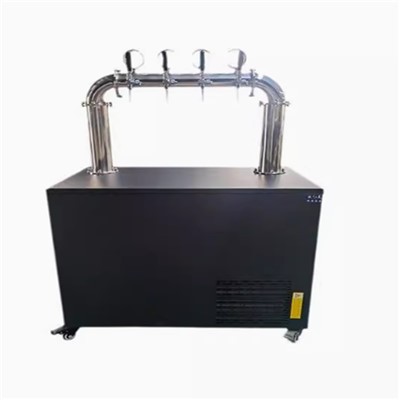 Beer Dispenser With 4 TapDehui 4-tap beer dispenser is made of 304 stainless steel with brass hardware, independent beer lines, recirculating water cooling, LED lighting and custom finishes for bars, restaurants and...Add to Inquiry
 -
 Wort Bump For BreweryFood grade stainless steel centrifugal pump is used in food processing, pharmaceutical, beer, dairy, milk and other industries. Our centrifugal pumps improve product quality and productivity for...Add to Inquiry


Why Choose Us
Production equipment
Main procuducts of the company includes beer brewing equipment,fruit wine equipment,winery equipment,distillation equipment etc.
Customized solutions
Shandong Dehui Fermentation Intelligent Equipment Co., Ltd. was established in 2016, specializing in the production of complete equipment solutions for beer, wine, coffee, and other fermentation industries.
Our certificates
The company has passed CE, PED certification, pressure vessel equipment certification and obtained more than 30 patent certification.
Sales Market
We Products are exported to Europe, the United States, Asia and other countries and regions.
Advantages of Brewhouse Plate Heat Exchanger

High Heat Conductivity. The plate in PHE can form a turbulence during heat exchanging, so it can supply high heat exchanging speed and lost a little pressure.
High flexibility. For the previous tubing heat exchanger, the original heat exchanging area can not be changed when you want to increase the hot wort amount. The plate heat exchanger offsets this shortcoming very well. You can increase and decrease the plates according to wort production.
Compact structure takes up small space. The PHE has compact structure and high heat exchanging efficiency. Based on same capacity, the PHE only takes up 1/3 area of tubing heat exchanger.
Less residue. The residue remaining inside is less, so it is quicker to open and close.
Gasket. Put the gasket in the groove, which has ability to bear high pressure and is convenient to disassemble.
Extra safe design. Special seal gasket can prevent mixing different liquid. The different liquid is separated by double seal on inlet and outlet. It can improve safety of heat exchanging efficiently.
1)It emphasizes the aroma of hops in beer in fermenation tanks.
2)Sensitive and careful dissolution of hop pellets (type 45 and 90) in the cold beer of fermenter.
3)Optimal extraction and increase in the proportion of essential oils in finished beer
4)Fixed period of the extraction of hops
5)Without heating, absence of agitators
6)The possibility of wort loss reduction in the whirlpool by up to 80 % due to compact spent hops
7)Inline cleaning
8)Aromatization of partial quantities and trial production sequences possible

Paramenters
|
Parameter Category |
Specification / Value |
Description & Rationale |
|
Application Purpose |
Wort Cooling (Knock-Out) |
To cool wort from boiling temperature (~98°C) down to yeast pitching temperature (18-22°C for ales, 7-12°C for lagers) in a single step. |
|
Flow Rates |
|
|
|
Wort Flow Rate |
~ 100 - 150 hL/h |
Example for a mid-sized craft brewery. Based on brewhouse size and desired whirlpool rest time. |
|
Cooling Media Flow Rate |
~ 120 - 180 hL/h |
Flow rate of coolant is typically 1.2 to 1.5 times the wort flow to achieve sufficient heat transfer. |
|
Temperatures |
|
|
|
Wort Inlet Temperature |
96 - 98 °C |
Temperature after the boil and whirlpool. |
|
Wort Outlet Temperature |
18 - 22 °C (or target pitch temp) |
The critical parameter to achieve. Requires a very cold coolant. |
|
Cooling Media Inlet |
-3 to -1 °C |
Must be a glycol-water mixture (e.g., 30-35% glycol) at a temperature well below the target wort outlet temp. |
|
Cooling Media Outlet |
~ 70 - 80 °C |
The glycol gets warmed significantly. This heat is wasted back to the glycol loop's cooling system. |
|
Heat Duty |
~ 400 - 600 kW |
The total amount of heat that must be removed from the wort per hour. Very high due to single-stage approach. |
|
Pressure Drop |
|
|
|
Wort Side |
< 0.8 - 1.0 bar |
Must be low enough to avoid crushing hot wort and causing cavitation in the wort pump. |
|
Coolant Side |
< 0.8 bar |
Must be within the capacity of the glycol circulation pumps. |
|
Design Pressure |
6 - 10 bar |
Standard for brewery PHEs to handle pressure spikes and allow for CIP. |
|
Plates |
|
|
|
Material |
AISI 316 / 316L Stainless Steel |
Food-grade, corrosion-resistant standard for breweries. |
|
Gaskets |
EPDM or NBR (Nitrile) |
Suitable for high wort temps and resistant to cleaning chemicals (CIP). |
|
Pattern/Chevron Angle |
High-Theta(e.g., 60°+/60°+) |
Creates high turbulence for efficient heat transfer, but also higher pressure drop. |
|
Connections |
4 x Tri-Clamp(1.5" or 2") |
Standard sanitary connections for breweries: Wort In/Out, Glycol In/Out. |
|
Material |
Sanitary SUS304 /304L/316/316L |
|
Capacity |
30l/50L/60L/100L( Custommizing acceptable) |
|
Finishing |
lnterior & Exterior: as customer's request |
|
Polishing Precision |
0.2μm to 0.4μm |
|
Accessories included |
Interior: Candle Filter Bottom: Beer Outlet Pipe and Discharging Pipe Top Lid:CO² lnflatable Head,Pressure Release Valve,Pressure Gauge,Tangent Beer lnlets,Cip Spraying Ball |
Different Types of Brewhouse Plate Heat Exchanger

Brazed Plate Heat Exchangers
For Refrigeration and Industrial Applications

Gasketed Plate Heat Exchangers
Suitable for many industries such as HVAC, food, brewing, and pharmaceuticals.

Welded plate heat exchangers
Used in the oil, gas, and chemical industries.

Semi-welded plate heat exchanger
Combines the use of welded and gasketed plates. The heat exchanger consists of two sets of plates welded together.
structure of Brewhouse Plate Heat Exchanger
Normal framework
The typical framework contains corrugated sheets, gaskets, compression plates, top and also reduced placing screws, as well as compression screws.
Put on hold framework
The put on hold framework is made up of corrugated plates, gaskets, repaired pushing plates, intermediate plates, movable pushing plates, braces, top and also reduced placing light beams, as well as compression screws.

Function of Hop Gun
Dry hopping: The primary function of a hop gun is to dry hop the beer. Dry hopping involves adding hops to the fermented beer after primary fermentation is complete. By injecting hops directly into the beer stream, the hop gun allows for better extraction of hop compounds, such as essential oils and aromatic compounds, without the need for extended contact time.
Aroma and flavor enhancement: Dry hopping with a hop gun enhances the beer’s aroma and flavor, imparting a fresh and vibrant hop character.
Controlled hop dosing: A hop gun allows brewers to control the amount of hops added to the beer, ensuring consistency in the final product. The ability to adjust the hop dosing gives brewers flexibility to achieve desired flavor profiles.
Reduced vegetal matter: Using a hop gun helps minimize the amount of vegetal matter, such as hop debris and particulates, entering the final beer. This can improve the beer’s clarity and stability.
Time and cost efficiency: Compared to traditional dry hopping methods, using a hop gun can save time and labor. It eliminates the need for manual handling of hop bags or transferring beer between vessels for dry hopping.
Working Principle Of a Plate Heat Exchanger
The working principle of a plate heat exchanger is based on the countercurrent flow of two fluids. In the brewing industry, one liquid is usually wort, which is the liquid extracted from the crushing process, and the other liquid is usually cold water or glycol. During brewing, the wort is cooled to the desired temperature with cold water or glycol.
During brewing, the wort is cooled to the desired temperature with cold water or glycol. The plate heat exchanger consists of two main channels, one for the wort and the other for the cooling liquid. The two channels are separated by a thin metal plate, which is designed to maximize the heat transfer capability between the two fluids.
The wort flows through the channels on one side of the plate, while the cooling fluid flows through the channels on the other side of the plate. The two fluids flow in opposite directions, with the wort flowing from the inlet to the outlet of the plate heat exchanger and the cooling fluid flowing from the outlet to the inlet. As the two fluids flow in opposite directions, heat is transferred between them through the thin metal plates. The wort gives off heat to the cooling liquid, which absorbs the heat and carries it away.
In a plate heat exchanger, the flow is diagonal. While hot liquid enters at the top and exits at the bottom, cold liquid enters at the bottom and exits at the top. So, the efficiency reaches the highest level.
Process of Hop Gun

1. Open the top cover (unscrew the bolts).
2. Pour partical type hops into the tank (Adding according to technological conditions, maximum adding volume is 50% of total volume), close the cover and screw the bolt tightly.
3. According to the above picture, connect the hop-gun and diaphragm pump into the system.
4. Empty the air in the hop-gun vessel — open the top relief valve, make beer flow into the vessel. Along with the entering of beer, air is pushed out slowly. When the hop-gun vessel is full with beer, close the top relief valve.
5. If the pressure inside of vessel is too low, adding CO2 to increase the vessel inside pressure.
6. Then open the valve on the beer recirculation pipeline. Open diaphragm pump for 2-6 hours (time based on the actual brewing technics), make beer flow circularly between hop-gun vessel and fermenter.
7. When recirculation is finished, empty the beer in the hop-gun vessel. CO2 can be added to help for emptying beer. If the fermenter pressure is too low, this procedure can also increase the fermenter pressure and CO2 content.
8. At last, close all valves. Connect with CIP system, clean and sterilize hop-gun vessel and related pipeline.At this point, the dry hopping work of beer in fermenter is finished.
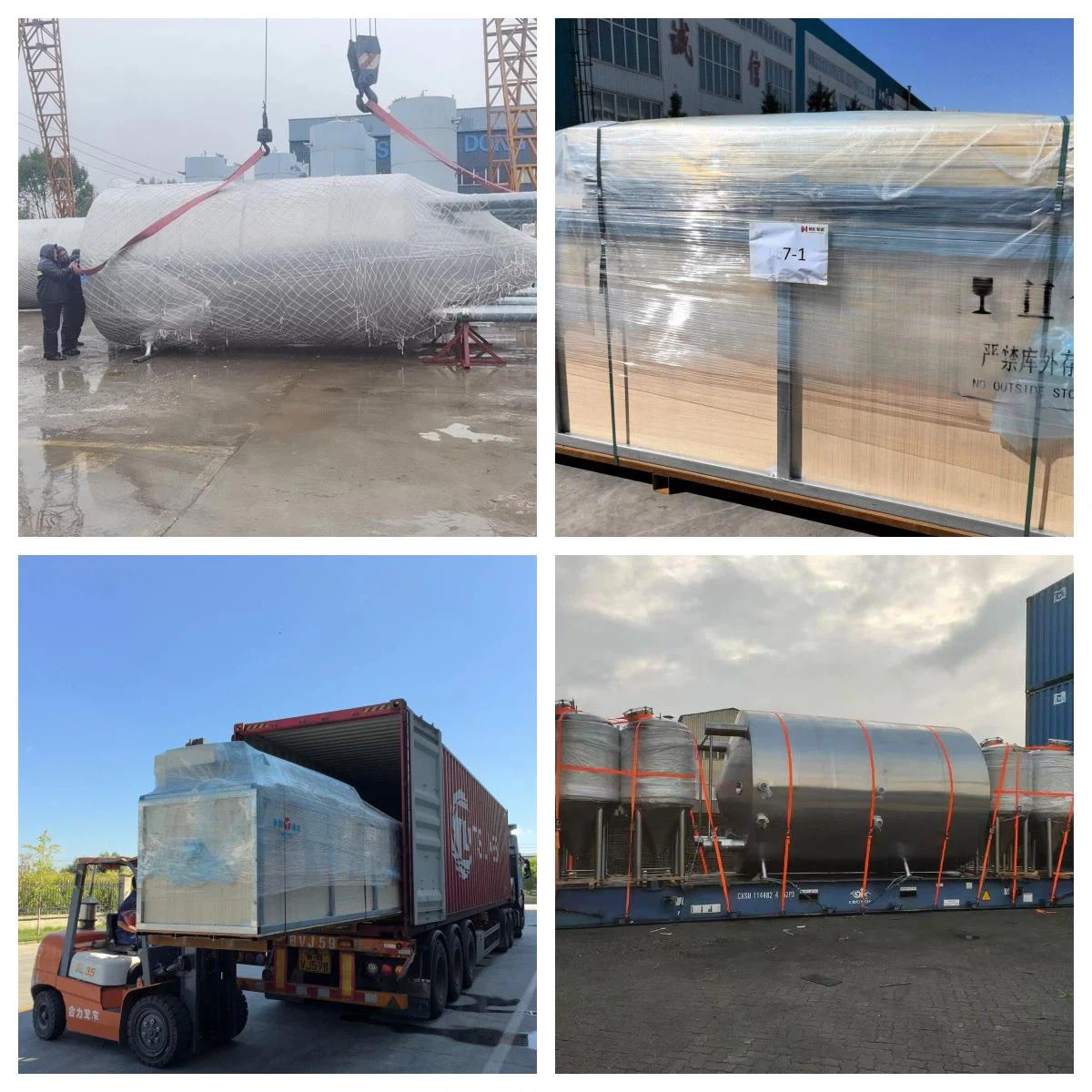
Packing & Shipping
FAQ
As one of the leading brewery auxiliary equipment manufacturers and suppliers in China, we warmly welcome you to buy high-grade brewery auxiliary equipment for sale here from our factory. All machines are with high quality and competitive price.
