

Kombucha Brewing Equipment
Commercial Kombucha Brewing Equipment Manufacturer
Dehui manufactures stainless steel kombucha brewing equipment for commercial beverage producers, kombucha brands and fermented beverage manufacturers. Our product range includes open-top fermentation vessels, commercial fermentation tanks and integrated kombucha production equipment.
We supply individual tanks and equipment combinations for different production capacities and process requirements. Equipment specifications and system configurations are determined according to the fermentation method, batch volume and production layout.
-
 Kombucha open top fermentation tankA malt milling machine is an essential piece of brewing equipment designed to crush malted grains efficiently while preserving husk integrity. Proper milling improves mash efficiency, lautering...Add to Inquiry
-
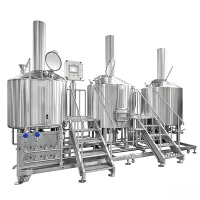
 Commercial Kombucha Brewing Equipment ManufacturerWhat is Kombucha Equipment Well, here is a detailed explanation about "Kombucha Equipment". In simple terms, kombucha brewing equipment refers to a complete set of tools and containers needed...Add to Inquiry
-
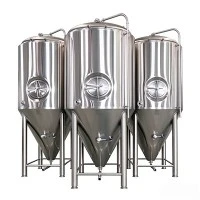
 Kombucha Fermentation TankKombucha is very popular in today's health drink market. Kombucha is made from sweet tea fermented from kombucha and Scoby (a symbiotic colony of bacteria and yeast).Add to Inquiry


Kombucha Equipment for Different Fermentation Requirements
Kombucha Fermentation Vessel – Open-Top Primary Fermentation
Designed for aerobic primary fermentation, this vessel provides an open structure for air exchange and SCOBY handling. Operators can add starter culture, place or remove SCOBY, and collect samples through the open top.
Available configurations include:
• SUS304 stainless steel construction
• Removable or protective top cover
• Glycol cooling jacket
• Thermal insulation
• Sampling and discharge valves
• Optional CIP spray ball
Kombucha Fermentation Tank – Commercial Fermentation and Conditioning
• Dehui kombucha fermentation tanks are designed for commercial batch processing and can be configured for different fermentation and conditioning methods.
• Available designs include open-top and closed-top structures, depending on the process requirements. Typical capacities include 300L, 500L, 1000L, 2000L and 4000L.
• Closed-top tanks can be used for enclosed fermentation and conditioning. Processes involving CO₂ carbonation or pressure-based secondary fermentation require tanks specifically designed and rated for the intended operating pressure, with corresponding pressure-control and safety components.
Commercial Kombucha Brewing Equipment – Integrated Production Solutions
• For new production facilities and plant expansions, Dehui can supply equipment combinations covering tea preparation, fermentation, product processing and packaging.
• The equipment scope is determined by the production process and may include preparation tanks, heat exchangers, fermentation vessels, mixing equipment, filtration systems, carbonation equipment, filling lines and CIP systems. Equipment supply and integration arrangements are confirmed according to the project scope.
• Individual equipment units can also be supplied for integration into existing production facilities.
Kombucha Production Process and Equipment Configuration
A typical kombucha production line may involve the following stages. The actual sequence depends on the formulation, fermentation method and packaging requirements.
|
Processing Stage |
Equipment |
Configuration Requirements |
|
Tea Preparation |
Tea Brewing and Mixing Tank |
Tea extraction, sugar dissolution and sweet tea preparation |
|
Cooling |
Plate Heat Exchanger |
Sized according to tea flow rate, inlet and target outlet temperatures, and coolant type and inlet temperature |
|
Primary Fermentation |
Open-Top Fermentation Vessel |
Supports aerobic fermentation requiring air exchange and SCOBY handling |
|
Ingredient and Flavor Mixing |
Mixing Tank |
Adds fruit juice, puree, sugar or other ingredients at the stage specified by the formulation |
|
Secondary Fermentation |
Bottle or Tank Fermentation Equipment |
Selected according to bottle conditioning or tank-based fermentation methods |
|
Carbonation |
Pressure-Rated Carbonation Tank |
Used for forced CO₂ carbonation when required |
|
Packaging |
Bottle, Can or Keg Filling Equipment |
Selected according to the final packaging format |
Not every production line requires a separate flavor-mixing or carbonation stage. Flavor ingredients may be added before or after primary fermentation, while secondary fermentation can take place in bottles or tanks. Forced carbonation requires appropriately pressure-rated equipment.

Batch Capacity and Fermentation Cycle
Determine the required working volume based on batch output, fermentation duration, cleaning turnaround and production frequency. Tank quantity should account for overlapping fermentation cycles and the time required to empty and clean each vessel.
Open-Top or Closed-Tank Configuration
Select open-top vessels when primary fermentation requires air exchange and SCOBY handling. Closed-top tanks are suitable for enclosed fermentation and conditioning processes. Any pressure-based operation requires equipment designed for the specified operating pressure.
Temperature Control Requirements
Define the required fermentation temperature range and temperature-control method. Cooling capacity, heating requirements and insulation specifications should be determined according to the process and installation conditions.
Cleaning and Product Transfer
Consider the cleaning method, tank accessibility and product transfer route when planning the equipment. CIP arrangements, sanitary connections and pipeline interfaces should match the cleaning procedure and production layout.
Tank Construction and Technical Configurations
Dehui kombucha fermentation tanks can incorporate the following construction and process components according to the selected model and specification.
|
Technical Configuration |
Function |
|
SUS304 Stainless Steel Inner Shell |
Provides the product-contact surface for kombucha processing |
|
TIG-Welded Construction |
Forms the welded joints of the tank structure |
|
Glycol Cooling Jacket |
Circulates glycol to control tank temperature |
|
Thermal Insulation |
Reduces heat exchange between the tank and surrounding environment |
|
CIP Spray Ball |
Distributes cleaning solution across the tank interior |
|
Sampling Valve |
Allows operators to collect samples during fermentation |
|
Sanitary Connections |
Connects the tank to product transfer pipelines and processing equipment |
|
Internal Surface Finish |
Determines the internal finish requirements for product-contact surfaces and cleaning access |
Material grade and internal surface finish should be selected according to product acidity, cleaning chemical composition and concentration, and operating temperature. SUS304 is available for standard configurations, while alternative grades can be considered when these conditions require higher corrosion resistance.
Customized Kombucha Brewing Equipment Manufacturing
Equipment dimensions and configurations can be adjusted to match the production process and facility layout.
|
Customization Area |
Available Options |
|
Tank Capacity and Dimensions |
Working volume, diameter, height and overall dimensions |
|
Tank Structure |
Open-top, closed-top and project-specific structural configurations |
|
Process Connections |
Inlet, outlet, sampling and transfer connection positions |
|
Control Configuration |
Temperature monitoring and control arrangements |
|
Equipment Layout |
Tank arrangement, equipment spacing and pipeline interfaces |
For a quotation, buyers can provide the target batch volume, fermentation method, required tank quantity, process requirements and available installation space.
Dehui's manufacturing process includes stainless steel cutting, tank forming, TIG welding, surface finishing, component installation and final inspection. Manufacturing specifications and inspection requirements are confirmed against the approved equipment configuration.
For complete production projects, support can include:
• Equipment configuration and technical drawings
• Production layout planning
• Equipment manufacturing and inspection
• Installation and commissioning support
• Operating guidance and after-sales technical assistance
The supplied equipment, project responsibilities and installation scope are confirmed before production.

FAQ
As one of the leading kombucha brewing equipment manufacturers and suppliers in China, we warmly welcome you to buy high-grade kombucha brewing equipment for sale here from our factory. All machines are with high quality and competitive price.
500 gallon fermentation tank, ss fermentation tanks, steel brewing tank