Production equipment
Main procuducts of the company includes beer brewing equipment,fruit wine equipment,winery equipment,distillation equipment etc.
Customized solutions
Shandong Dehui Fermentation Intelligent Equipment Co., Ltd. was established in 2016, specializing in the production of complete equipment solutions for beer, wine, coffee, and other fermentation industries.
Our certificates
The company has passed CE, PED certification, pressure vessel equipment certification and obtained more than 30 patent certification.
Sales Market
We Products are exported to Europe, the United States, Asia and other countries and regions.
The Main Features Of 3 Vessels Brewhouse Equipment

Efficiency
Simultaneous processes reduce overall brewing time.

Scalability
Suitable for small to large operations.

Control
Independent vessels allow for precise temperature and process management.

Customization
Accommodates a variety of brewing styles and batch sizes.
|
Model |
DH-1000 |
|
Capacity |
1500L/Batch |
|
Material |
SUS304/ 316(depends) |
|
Brewhouse system |
Mash Tun / Lauter Tun /Brew Kettle & Whirlpool. |
|
Heating method |
Steam /Electric /Direct fire |
|
Power |
15kw |
|
Voltage |
AC380/220V, 50/60HZ |
|
Water consumption |
4m3/T |
|
Diameter |
1560mm |
|
Height |
3000mm |
|
Automation system |
Semi/Fully automatic |

Heating brewing water: First, heat the water in the hot water barrel to 70-78°C in preparation for mashand rinsing malt.
Mash Tun: Add the crushed malt to the mashbarrel and mix it with hot water, keeping it between 60-70°C, so that the enzymes can convert starch into fermentable sugars. This step usually lasts 60-90 minutes.
Lauter Tun: After mash, the wort is transferred to the lauter tun to separate the spent grains, while the residual sugars are rinsed with hot water to increase the extraction rate.
Boiling and adding hops: The filtered wort is transferred to the boiling barrel and heated to 100°C for boiling (60-90 minutes), and hops are added at different time points to give bitterness and aroma.
Wort Chilling: After boiling, use a chiller to quickly cool the wort to 18-25°C (depending on the yeast type) for fermentation.
Fermentation: The cooled wort is transferred to a fermentation tank, yeast is added, and primary fermentation is carried out for 1-2 weeks. After that, secondary fermentation or maturation may be required depending on the beer style.
Packaging: After fermentation is complete, the beer is filtered, carbonated, and bottled or kegs before drinking. This 3-container system is efficient and controllable, suitable for home craft brewing and small commercial brewing.
Mash Barrel
This vessel holds the mixture of malted grains and hot water during mashing. It provides the necessary environment for enzyme activity and temperature control.
01
Filter Bucket
The lauter tun facilitates the separation of the liquid wort from the stillage material. It usually contains a false bottom or filter bed that allows liquids to pass while retaining solids.
02
Heating And Temperature Control
Brewhouse equipment contains heating systems, such as steam jackets or electrical components, to maintain the temperature range required for enzyme activity and starch conversion.
03
Stirring Mechanism
Agitation by mechanical devices such as paddles or rakes ensures uniform mixing of the mash, promotes enzyme activity and prevents the formation of clumps or dough balls.
04
Wort Collection And Transfer
Equipment may include pumps, piping, and valves to transfer the extracted wort from the mash tun to next stages of the brewing process.
05


Homebrew: For many people, homebrewing is more than a hobby, it’s a passion. Enthusiasts often start with a basic setup but quickly graduate to more complex systems, such as a three-tank setup. At home, these systems enable people to make unique beer recipes, experiment with flavors, and enjoy the art of brewing.
Craft breweries: The success of the craft beer revolution is largely due to three-tank brewing systems. Craft breweries, known for their innovation and flavor diversity, rely on such systems to maintain consistency while scaling up production.
Brewhouses and taverns: These venues brew beer on-site, ensuring freshness and direct contact with customers. The three-tank system in brewhouses provides transparency, as customers can often see the brewing process, which enhances their overall experience.
Brewing education and training: With the rise of craft beer, there has been a surge in the number of educational institutions offering brewing science courses. These schools use three-tank systems to provide hands-on training, ensuring that students gain practical experience.
Pilot brewing at large breweries: Large commercial breweries often develop new recipes on a small scale before mass production. The three-tank system can serve as a pilot system, allowing them to test and refine recipes, ensuring the beer meets their standards as they scale up.
Collaborative brewing: Collaboration between breweries is a tradition in the beer world. Breweries work together to brew unique, limited-edition beers. The three-tank system, especially at a mid-sized scale, provides the flexibility needed for such collaborations.
Specialty brewing: In addition to traditional beer, the three-tank system can be used to produce specialty beverages such as non-alcoholic beer, gluten-free beer, and even kombucha. The precision and control these systems offer are invaluable for producing such niche beverages.
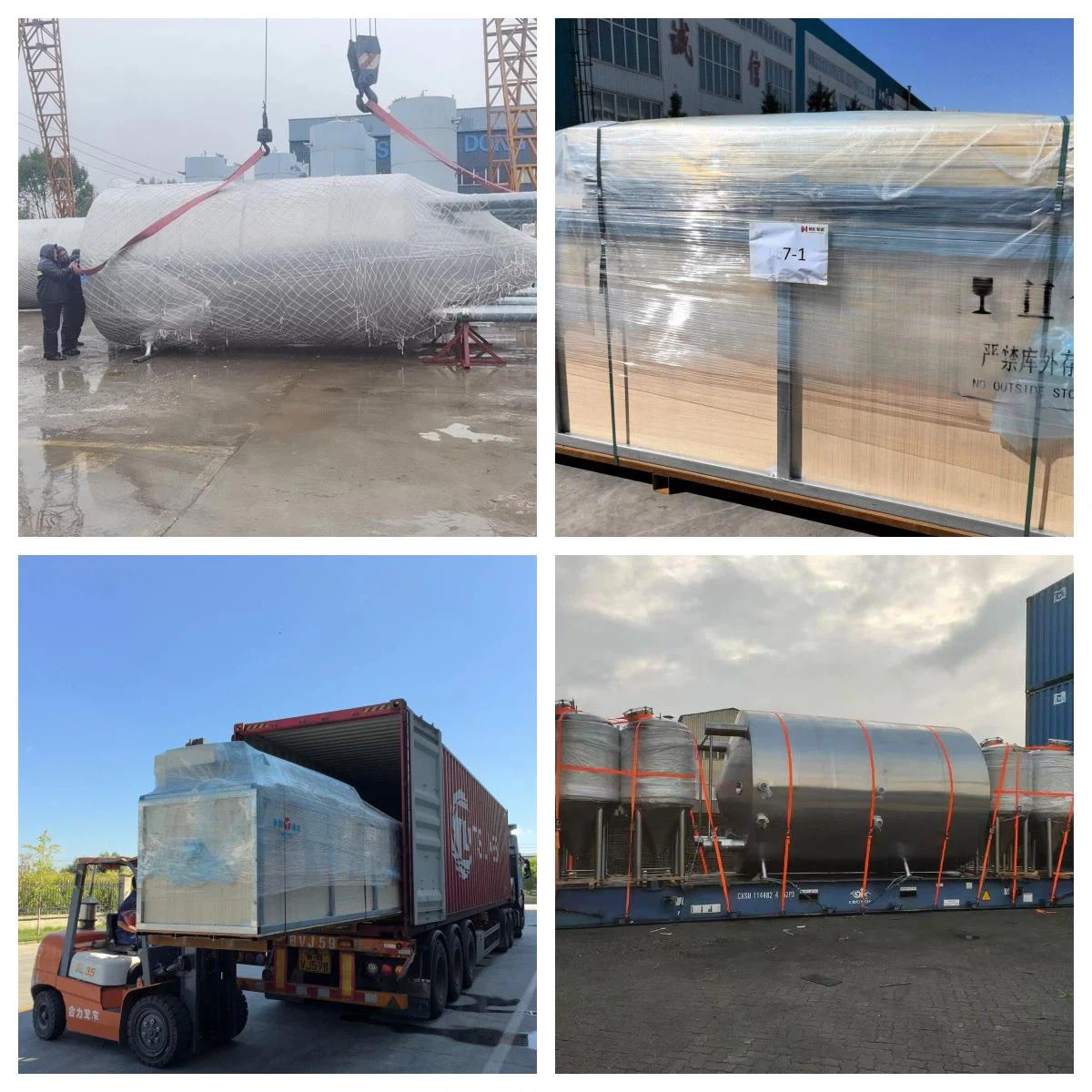
Small beer equipment will be shipped by LCL or full container (20GP/40GP/40HQ). The small beer brewing system will be wrapped in plastic wrap in fumigation-free wooden boxes (in fumigation-free) or secured with iron racks. Craft beer brewing equipment meets export standards, By bulk carrier or stand-alone container, size and quantity depends on configuration and capacity.

As one of the leading 3 vessels brewhouse equipment manufacturers and suppliers in China, we warmly welcome you to buy high-grade 3 vessels brewhouse equipment for sale here from our factory. All machines are with high quality and competitive price.