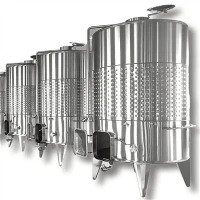
Brewery CIP
Designed specifically for microbreweries and brewpubs, this mobile CIP cart is your ultimate cleaning sidekick. Its compact, wheeled design means one person can easily maneuver it right next to your fermenters or brewhouse. When the job is done, simply tuck it away in a corner-it's designed to be efficient without hogging your valuable floor space.
The dual-tank system takes the guesswork out of cleaning. One tank handles alkaline for degreasing, while the other uses acid to tackle mineral deposits. Combined with a final rinse, this creates a complete "shower" cycle that blasts away sticky proteins and stubborn tartrates. The result? Spotless equipment and beer that tastes exactly how it should, batch after batch.
Built entirely from food-grade 304 stainless steel, it's tough enough to handle harsh chemicals without rusting, ensuring total hygiene. The intuitive control panel acts as the "brain" of the operation. No need to manually calculate chemical ratios or babysit the temperature-simply set the program, and the system automatically maintains the perfect heat and cycle time. It turns a complex chore into a "set-it-and-forget-it" task, letting you focus on brewing while the machine does the scrubbing.
Aaplication of Brewery CIP
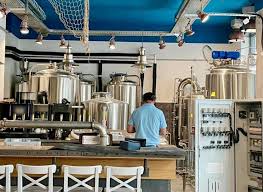
Guests line up at the bar, eager for fresh pours, while brewers tend to fermentation tanks behind the counter. Tucked neatly beside the control cabinet on the far right is our space-saving compact CIP unit. It connects flawlessly to your brewhouse and fermenters, fitting effortlessly into tight layouts - the quiet workhorse powering your craft brewery.
Once service wraps up, competitors waste hours taking apart piping and scrubbing tank interiors manually. With our CIP system, you only need a single tap on the control screen. It automatically cleans all vessels and pipework thoroughly, leaving every piece sanitized and ready for the next business day.
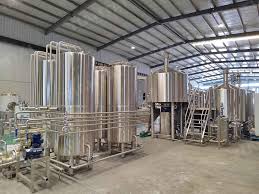
This showcases a standard medium-scale craft brewhouse workshop: neatly arranged polished stainless steel tanks are interconnected by an extensive piping network and mashing equipment, forming a continuous automated beer production line.
Our heavy-duty central CIP cleaning system is compactly installed within the equipment cluster on the left of the picture. Acting as the core cleaning hub of the whole plant, it links to every fermenter through dedicated circulation pipelines.
Once one fermentation cycle is complete, no manual operation is required. The CIP unit activates automatically, accurately proportioning acidic and alkaline detergents and recirculating the cleaning fluid through all tanks and pipework to fully eliminate organic residues and harmful microbes. The system runs unattended and cleans every internal corner thoroughly, allowing you to start the next brewing batch right away without downtime.
Capacity Classification of Brewery CIP
Tank Capacity: 50–200 L
The Lowdown: Think compact and mobile-usually on wheels. It's designed for low flow rates and straightforward, no-fuss operation (manual or semi-auto).
Best For: Homebrewers, pilot labs, tiny taprooms, or anyone just tinkering with new recipes.
Tank Capacity: 200–1,000 L
The Lowdown: Flexible enough to move around or bolt down. It comes with basic programming so you can clean 2 to 5 tanks at once without babysitting it.
Best For: Small craft breweries (cranking out 500–2,000 L/day), brewpubs, or small-batch beverage makers.
Tank Capacity: 1,000–5,000 L
The Lowdown: This is where things get serious. Fixed installation with PLC automation. It hooks up to 10–20 tanks, recycles chemicals, and keeps a close eye on temps and concentrations to save you money.
Best For: Mid-sized breweries (2,000–10,000 L/day), growing beverage lines, and dairy processing plants.
Tank Capacity: 5,000 L and up
The Lowdown: The "nerve center" of your plant. It's a centralized beast with separate tanks for acid, caustic, water, and recovery. Fully automated, cleans dozens of tanks, and logs every single detail to keep the FDA and ISO auditors happy.
Best For: Large-scale breweries (10,000 L+/day), major beverage corporations, pharmaceutical lines, and big dairy operations.
Advanced Production Equipment
Critical Role of Professional Equipment in Brewery CIP
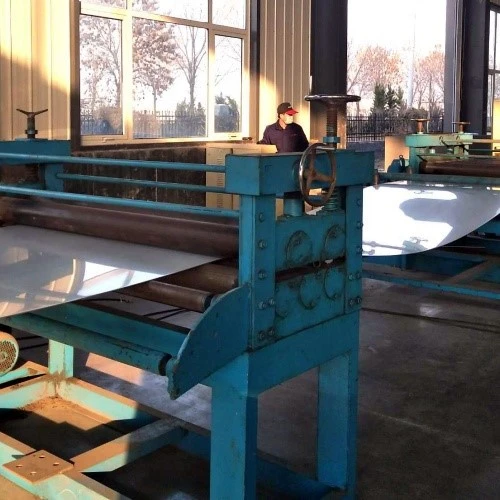
Uncoiling and Cutting Line
We don't just build CIP tanks-we start by perfecting the raw material. Our Uncoiling and Cutting Line ensures the steel we use is flat to microscopic levels. By removing the internal stress and waves left from the coil, we create CIP vessels with surgical-grade smooth inner walls, leaving no room for contaminants to hide.

Laser Cutting Machine
What is the #1 enemy of CIP cleaning? "Unreachable dead corners." These microscopic traps often hide in the rough edges of poorly cut holes.
To eliminate this risk entirely, we deploy a high-power Laser Cutting Machine. It doesn't just "drill holes"-it performs micron-level sculpting at the speed of light.
Whether it's a complex manway flange or a tiny gauge port, the laser delivers perfectly perpendicular cuts with zero burrs. This means when we weld, the pieces fit together with "zero gap" precision

Cone Rolling Machine
A CIP system is only as good as its drainage. Flat bottoms trap water; hand-hammered cones trap bacteria in the wrinkles.
That's why we use a professional Cone Rolling Machine. It shapes stainless steel into a perfect funnel with a smooth, flawless curve-no hammer marks, no stress points.
The result? A tank that drains like a sieve. Every last drop of cleaning solution exits quickly, leaving absolutely nothing behind for bacteria to feed on.
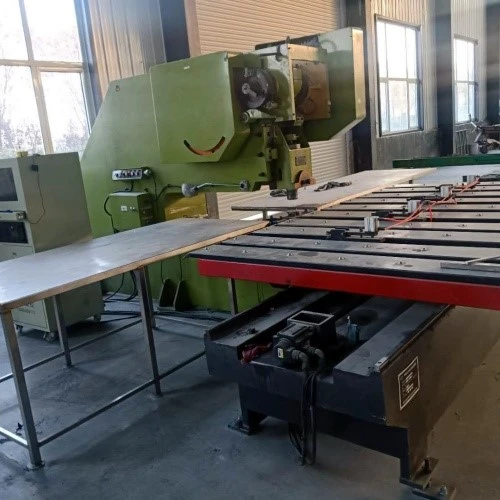
Punching Machine
When building CIP cleaning systems for breweries, this machine is used to process the connecting nozzles and flanges, where precision is particularly important.
The old drilling methods often leave rough inner surfaces, and the positions of the bolt holes frequently don't align properly. When the bolt holes don't line up, workers have to force them into place during installation.
This kind of forceful assembly puts stress on the flange sealing surface, causing it to deform and become uneven. As a result, the connection doesn't seal tightly, leading to leaks. Once leaks occur, repairs become both troublesome and costly.
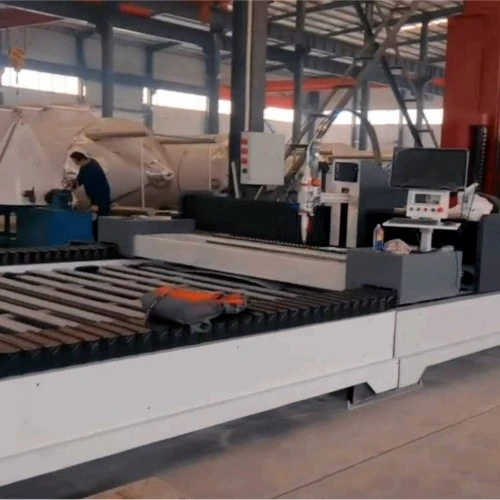
Fully Automatic Laser Welding Machine
Traditional TIG welding tends to leave behind raised weld bumps and rough surfaces, which easily trap contaminants and become hard-to-clean areas. In contrast, our fully automated laser welding technology produces fine, smooth seams, giving the equipment a mirror-like finish.

Robotic Automatic Welding System
When mass-producing CIP cleaning systems for breweries, the quality of welding directly determines whether the system can be thoroughly cleaned and how durable the equipment will be. We use robotic automated welding. Through precise computer programming, the robot operates with extreme accuracy and consistency, with minimal positional error in every weld.
Whether it's the circumferential seams of tanks or the fillet welds on various pipe nozzles, every weld made by the robot is uniformly smooth and consistent.

Polishing Machine
What is the ultimate goal of CIP? "Zero Residue." But a rough interior is a trap. Even if it looks clean to the naked eye, microscopic valleys will still harbor contaminants.
To meet the strictest hygiene standards, we deploy a Multi-Station Automatic Polishing Machine. This isn't just about "shining" the surface. It's a surgical process of grinding, buffing, and honing that reduces the surface roughness (Ra) to below 0.4μm, or even 0.2μm.Key Considerations for Packaging and Shipping of Beer Brewhouse
CIP Technical Parameter
| Parameter Category | Parameter Name | Description / Typical Value | Importance |
|---|---|---|---|
| System Type | Configuration | Single-Tank, Multi-Tank (Pre-rinse, Alkali, Acid, Sanitizer), Recovery vs. Single-Use | Determines automation level, chemical/water efficiency, and footprint. |
| Capacity & Flow | CIP Supply Pump Flow Rate | Brewery: 50 - 150 m³/h Pub: 2 - 10 m³/h |
Must provide sufficient turbulence (1.5 m/s velocity) in pipes and tanks for mechanical cleaning. |
| CIP Tank Volume(s) | Brewery: 5,000 - 20,000 L total Pub: 200 - 1,000 L total |
Holds cleaning solutions for the circuit. Size depends on pipe/tank volume to be cleaned. | |
| Pressure & Power | CIP Supply Pump Pressure | 3 - 6 bar (typical for vessel cleaning) | Overcome system pressure drop and operate spray devices (e.g., tank balls). |
| Pump Motor Power | Brewery: 15 - 75 kW Pub: 1.5 - 7.5 kW |
Directly related to flow and pressure output. | |
| Temperature Control | Heat Exchanger Capacity / Heater Power | Brewery: Steam HEX (sized for flow) Pub: Electric Heater: 9 - 36 kW |
Critical for effective cleaning. Alkali cycle typically 75-85°C, acid cycle 60-70°C. |
| Temperature Control Range | 20°C - 90°C | Must cover cold rinsing to hot cleaning. | |
| Control & Automation | Control System | Brewery: Fully automated PLC with HMI/SCADA. Pub: Semi-auto or manual control panel. |
Defines operational complexity, recipe management, and data logging. |
| Key Sensors | Conductivity (for dosing & recovery), Temperature, Flow, Pressure, Level. | Essential for automated control and process verification. | |
| Spray Devices | Tank Spray Ball/Ball Type | Fixed, Rotating (360°). Stainless Steel (AISI 304/316). | Must provide 100% coverage of vessel interior surfaces. Flow rate and pressure specific. |
|
Spray Device Operating Pressure |
1.5 - 3 bar at the device. | Ensures correct spray pattern and impact. | |
| Materials & Connections | Wetted Parts Material | Food-Grade Stainless Steel: AISI 304 (1.4301) or 316 (1.4404) for all pipes, tanks, pumps. | Corrosion resistance, hygiene, and compliance with food safety standards. |
| Pipe Connections | Tri-clamp (common), DIN/ISO flanges. | Standard for hygienic, easy-to-disassemble connections. | |
| Chemical Dosing | Dosing System Type | Brewery: Proportional pump integrated with PLC. Pub: Manual addition or small metering pump. |
Accurate and safe injection of concentrated chemicals. |
| Documentation | Compliance & Certificates | CE Marking, PED (Pressure Equipment Directive) for vessels, Electrical Safety. Materials Certificates (3.1B). | Legal and safety requirements for equipment installation and operation. |
Packing and Delivery Of Brewery
Pre-Shipment Coordination
Confirm total packing crates, maximum cargo dimensions & weight, and delivery schedule in advance. Arrange proper unloading gear (forklift/crane) and indoor covered storage at your premises.
Goods Receiving Check Upon Arrival
Outer packaging: Inspect wooden cases for severe breakage or water soaking marks.
Item matching: Cross-reference with the packing list to tally crates and main parts before signing the delivery receipt.
Unpacking Inspection Checklist
Documents: Retrieve the technical file box first, confirm drawings, operation manuals and certification papers are complete.
Outer metal finish: Check stainless steel surfaces for scratches, dents and torn protective film.
Vessel & pipe interiors: Randomly sample tank/pipe inner walls to confirm they are clean, dry and all ports tightly sealed.
Core spare parts: Examine control cabinets, pumps and precision meters for loose fittings or damage.

CERTIFICATION



Q1: Our bar is small and doesn't have much space. Will your Brewery CIP system fit? Is it too complicated?
A1: No need to worry about that. We offer a compact, all-in-one CIP station specifically designed for craft brewing environments. It integrates the acid tank, alkali tank, and control cabinet into a single mobile cart, taking up minimal space. Operation is extremely simple-much like using a "professional coffee machine cleaner": just connect, select the program (for fermenters, pipelines, etc.), and start with one touch.
Q2: With our limited staff, can this system really save us time and labor?
A2: Absolutely. Manually cleaning a fermenter can take 1–2 hours of labor-intensive work. Our automated CIP system can reduce active cleaning time by approximately 50%. More importantly, while the system runs automatically, your brewer can focus fully on more valuable tasks such as mashing, packaging, or customer service. It minimizes high-intensity, repetitive work and enhances both operational efficiency and staff satisfaction.
Q3: Which types of equipment is this CIP cleaning cart suitable for? What is the maximum tank capacity it supports?
A3: This mobile CIP cart is specifically designed for craft brewing environments and can flexibly clean fermentation tanks, bright beer tanks, yeast tanks, mash tuns, heat exchangers, and process pipelines. Its standard configuration supports efficient cleaning of tanks with a capacity of up to 2,000 liters.
Q4: Does the equipment require an external power source and steam supply? What are the on-site installation requirements?
A4: The equipment adopts a fully electric design, requiring only connection to a 380V industrial power supply (a 220V version is optional) and the facility's tap water pipeline, with no need for an external steam source. Installation simply needs to meet three conditions: ① a flat surface to secure the mobile wheel brakes; ② a floor drain within a 1.5-meter radius; and ③ a power outlet located ≤5 meters from the equipment. We provide complimentary on-site survey and guidance services.
Q5: Compared to a fixed brewery CIP system, are there differences in the cleaning effectiveness and consumable costs of the mobile cart?
A5: Under identical process parameters, the cleaning effectiveness of the mobile cart is completely consistent with that of a fixed system, with both capable of meeting food-grade hygiene standards. Regarding consumable costs:
Water-Saving Advantage: Due to its shorter pipelines and smaller water retention capacity, each cleaning cycle can reduce pre-rinse water consumption by 15%.
Chemical Adaptability: The system comes standard with an intelligent dilution module, which automatically adjusts to different concentrate concentrations, thereby preventing waste.
Customer Review
Anti-shake and high stabili
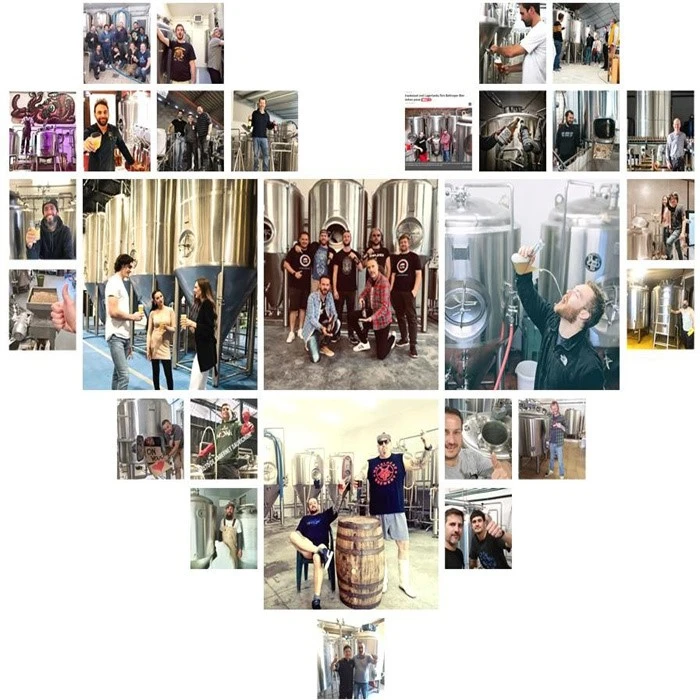
This is where our craftsmanship truly comes to fruition. Our products' journey does not finish once they leave our factory for shipment-it only truly begins the second they arrive at your facility, fully operational and integrated seamlessly into your daily production workflow. Client photos like this mean far more than simple feedback; they serve as tangible proof that we have delivered on our promise. Thank you for sharing this shot with us; there is no greater reward we could hope for.
Hot Tags: brewery cip, China brewery cip manufacturers, suppliers, factory