Material: Typically constructed from high-grade stainless steel (such as 304 or 316L), which ensures it does not impart any flavors to the beer and allows for easy cleaning and sterilization.
Pressure Vessel: The BBT is a pressurized tank, designed to withstand the internal pressures required for carbonation and the transfer of beer.
Temperature Control System: The tank is usually equipped with a jacket connected to a glycol cooling system. Precise temperature control is crucial for maintaining beer stability, preventing oxidation, and retaining carbon dioxide (CO₂).
Cone Bottom: Similar to fermentation tanks, the conical bottom design aids in collecting and concentrating settled solids, such as yeast and other sediments, which can then be discharged through a bottom valve (a process known as "dumping trub" or "dropping yeast").
CIP System: Fitted with a Clean-In-Place (CIP) system, which ensures thorough, sterile cleaning after each use to prevent cross-contamination between batches.
Specialized Fittings & Accessories:
Pressure Gauge and Safety Valve: Essential for monitoring internal pressure and ensuring operational safety by preventing over-pressurization.
Carbonation Device: Such as a carbonation stone or specialized spray ball, is used to efficiently dissolve CO₂ into the beer during forced carbonation.
Sample Valve: Allows the brewer to draw samples conveniently to monitor carbonation levels and beer clarity throughout the conditioning process.
Sight Glass: Some BBTs are fitted with a sight glass, providing a visual means to inspect the beer's clarity and color without opening the tank.
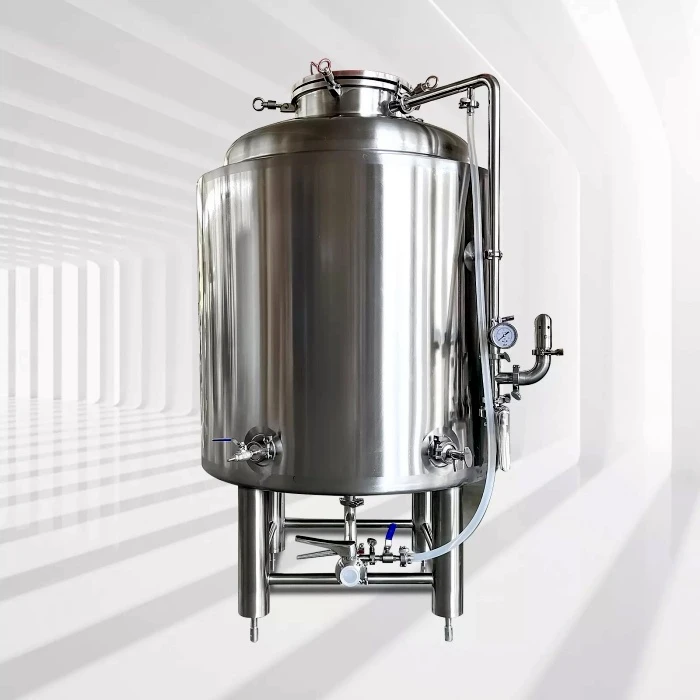
Bright beer tanks Function
Clarification & Sedimentation – Holds beer after filtration to allow remaining yeast and particles to settle.
Carbonation – CO₂ is often introduced here to achieve the desired carbonation level.
Temperature & Pressure Control – Maintains optimal conditions (typically 0–4°C, 10–15 PSI) to stabilize the beer.
Bright Beer Storage – Serves as a buffer tank before bottling, canning, or kegging.
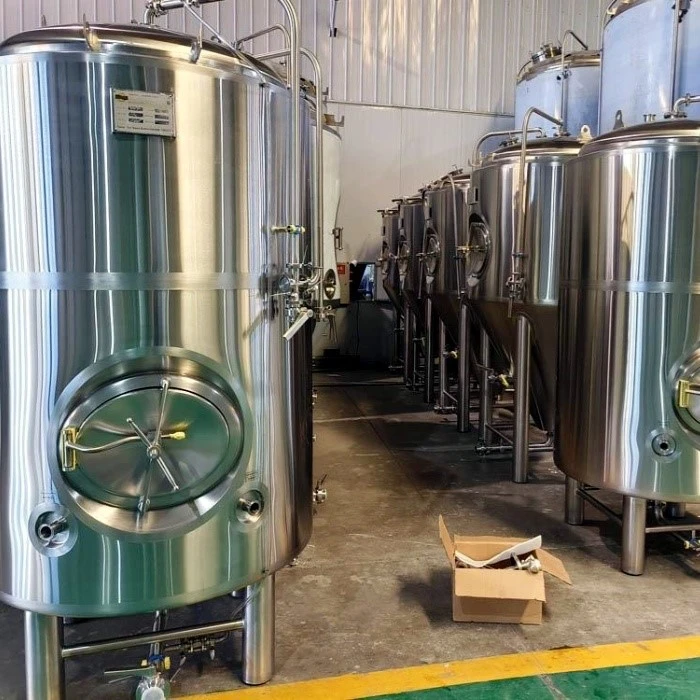
Key Characteristics of a Bright Beer Tank
1. Multi-Functional Integration: The "Finishing Hub" for Beer
A Bright Beer Tank is not merely a storage vessel, but a multi-functional container that integrates carbonation, clarification, maturation, and dispensation.
All-in-One Processing: Beer undergoes its final critical steps here before leaving the brewery, ensuring the product is in its optimal state.
2. Superior Quality Assurance
Pure Flavor Profile: Constructed from high-grade stainless steel to prevent any contamination of the beer's flavor.
Brilliant Clarity: Through sedimentation and the addition of fining agents, the beer achieves a "bright" and visually perfect appearance.
Consistent Mouthfeel: Precise temperature and carbonation control guarantee a consistent level of carbonation (carbonation level) and mouthfeel with every batch.
3. Efficient Production Design
Conical Bottom Design: The conical base facilitates the efficient collection and discharge of sediment (dumping trub/yeast), ensuring a pure beer body.
Clean-In-Place (CIP) System: Equipped with an automated CIP system that enables thorough, sterile cleaning, significantly improving efficiency and preventing contamination.
Pressure Vessel Design: As a pressurized tank, it can withstand the pressures required for carbonation and also utilize this pressure to efficiently transfer beer to packaging lines or bar taps.
4. Precise Process Control
Controlled Carbonation: Fitted with carbonation devices (such as a carbonation stone), allowing brewers to precisely control CO₂ levels to achieve the desired foam and mouthfeel.
Accurate Temperature Control: The jacket, connected to a glycol system, maintains the beer at an ideal low temperature, which is crucial for preservation, stability, and CO₂ retention.
Real-Time Monitoring: With pressure gauges, safety valves, and sample valves, brewers can continuously monitor and adjust the beer's condition throughout the process, ensuring perfect results.
5. Flexible Application and Dispensation
Dual Role: It acts both as a buffer tank for packaging lines (supplying beer for bottling, canning, or kegging) and as a direct-serving tank in brewpubs (connected directly to the tap), making it extremely versatile.
Guardian of Freshness: Its sealed and pressurized design effectively excludes oxygen, serving as the final critical line of defense in maintaining beer freshness.
Bright Beer Tank Specification
| Parameter Category | Specific Parameter | Typical Range / Standard | Notes / Explanation |
|---|---|---|---|
| General Design | Primary Material | AISI 304 / 316L Stainless Steel | 316L offers superior corrosion resistance, especially for acidic environments. |
| Surface Finish | 0.4 - 0.6 µm Ra (Mirror Polish) | A smooth Electropolished finish minimizes bacterial adhesion and eases cleaning. | |
| Design Pressure | 1.5 - 3.0 bar (22 - 45 psi) | Must withstand carbonation and transfer pressures. Safety valves are set accordingly. | |
| Capacity & Dimensions | Working Volume | 100 L - 20,000+ Gal | Sized based on brewery batch output. Typically 1-2 times a fermenter batch. |
| Total Volume | 10-20% > Working Volume | This headspace is crucial for carbonation and foam control. | |
| Aspect Ratio (H:D) | 2:1 to 3:1 | A taller, slimmer design promotes better natural clarification. | |
| Temperature Control | Cooling Method | Glycol Jacket | Single or double jackets on the cylinder and cone. |
| Operating Temperature | -2°C to 4°C (28°F to 39°F) | Near-freezing temperatures are common for lagers and clarity. | |
| Carbonation & Flow | Carbonation Method | Carbonation Stone / Spray Ball | Forced carbonation is standard. |
| Beer Outlet | 1.5" to 4" Tri-Clamp Ferrule | Size depends on tank volume and desired flow rate for packaging. | |
| Fittings & Accessories | CIP System | Spray Ball (Fixed or Rotary) | Ensures complete interior coverage for automated cleaning. |
| Pressure Gauge | 0 - 4 bar / 0 - 60 psi | For visual monitoring of internal pressure. | |
| Safety Valve | Set to 110-125% of design pressure | Prevents over-pressurization and ensures vessel safety. | |
| Sample Valve | 1/2" or 3/8" Tri-Clamp Ferrule | Allows for sampling without introducing oxygen or losing pressure. |
Why Bright Beer Tanks (BBTs) are Needed?
Final Clarification: They allow suspended yeast, proteins, and hop matter to settle out, yielding a brilliantly clear beer prior to packaging.
Carbonation Control: BBTs enable precise adjustment of CO₂ levels, either through forced carbonation or natural refermentation, to achieve the target carbonation.
Flavor Maturation & Stabilization: This stage allows flavors to harmonize, undesirable compounds (like diacetyl) to be reduced, and the beer to be stabilized through cold storage, thus enhancing its shelf-life.
Quality Assurance & Serving: They serve as a pivotal point for final quality checks to ensure consistency. In taprooms, BBTs can also function as direct-serving tanks, dispensing beer straight from the tank to the tap.
Process Buffer: BBTs act as a flexible buffer between fermentation and packaging, allowing these operations to be scheduled independently.
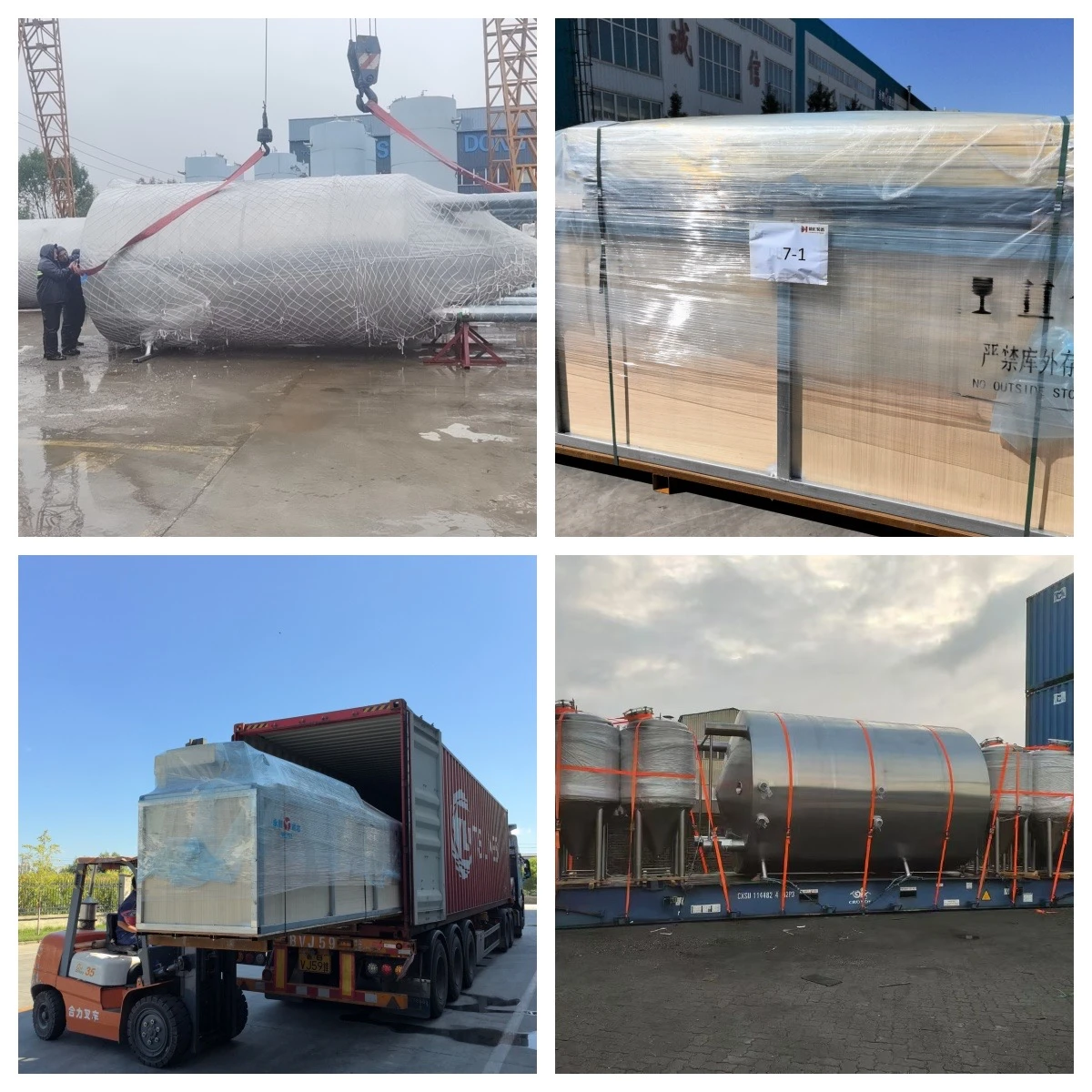
Packing & delivery
Certificate

Hot Tags: bright beer tanks, China bright beer tanks manufacturers, suppliers, factory