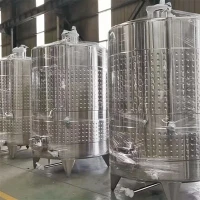
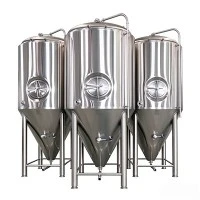
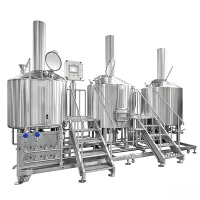
Material - Food-grade stainless steel
It usually uses 304 or 316L stainless steel. These two types of steel have extremely strong anti-corrosion and rust-prevention capabilities, and can perfectly handle various acidic substances (such as malic acid, citric acid, and tartaric acid) produced during the fermentation of fruit wine, ensuring that there is no rust or the release of harmful substances, and ensuring the purity and safety of the wine.
Smooth surface without pores: The interior is usually mechanically polished or more advanced electrolytic polishing, smooth like a mirror. This means that bacteria and impurities cannot hide, and it is very easy to clean and disinfect, fundamentally eliminating contamination by foreign bacteria.
Structure - Scientific design
Sealing: The tank can be fully sealed. By installing a water seal (fermentation lock), carbon dioxide can be released while preventing external air and microorganisms from entering, effectively preventing oxidation and contamination.
Temperature control system: The exterior of the tank usually has a jacket (like a jacket), which can be connected to a cold water machine (glycol freezer) or a hot water circulation system, thus precisely controlling the fermentation temperature. This is the key to brewing high-quality fruit wine, as temperature directly affects yeast activity and the formation of flavor substances.
Application
The most important and core application field of stainless steel wine fermentation tanks is utilized by almost all modern wineries.
1. Large-scale fruit wine/wine factories
Main purpose: Conduct large-scale primary fermentation and aging of various types of fruit wines such as cider, wine, plum wine, blueberry wine, and cherry wine.
Features: Use large vertical tanks ranging in capacity from several tons to hundreds of tons. Usually integrated with fully automatic temperature control systems (glycol jackets), CIP cleaning systems, monitoring sensors, etc., to achieve high efficiency, standardization, and batch production.
2. Breweries and small distilleries
Main purpose:
Brew fruit beer: During the beer brewing process, mix fruits (such as cherries, raspberries, peaches) for mixed fermentation or later soaking.
3. Sparkling Wine Producers
Main Application: Produce sparkling fruit wines (such as sparkling apple wine, sparkling peach wine) using the "Charmat Method". This method involves secondary fermentation in a pressure-resistant stainless steel fermentation tank, where the generated carbon dioxide dissolves into the wine under pressure, creating bubbles.
Features: Must use pressure-resistant fermentation tanks that can withstand certain pressure (typically 4-6 bar), and the tank bodies require higher processing requirements.
4. Premium Wineries and Handcrafted Wineries
This scenario places greater emphasis on quality, flavor exploration, and the flexibility of small-batch production.
Premium Apple Winery / Family Winery
Main purpose: To produce high-quality, distinctive fruit wines in small batches and with multiple varieties. The winemaker can ferment different varieties of fruits (such as different types of apples) in separate tanks to facilitate precise blending later on.
5. Restaurant/Hotel Winery Workshop
Main purpose: To produce unique specialty fruit wines for one's own restaurant or hotel, as part of the dining experience, to enhance the brand identity and customer satisfaction.
6. Research and educational institutions
Research institutes and universities (Food Science, Winemaking Engineering)
Main application: For teaching demonstrations and scientific research, such as studying the effects of different yeast strains, fermentation temperature, pH value, etc. on the flavor and quality of fruit wine.
7. Advanced amateur winemakers
Homebrew enthusiasts
Main application: Enthusiasts who pursue the ultimate experience will use small (20 liters - 100 liters) stainless steel fermentation tanks to brew apple wine, wine, etc., in order to obtain a more professional and stable quality compared to plastic barrels or glass jars.

Parameter
| Category | Parameter | Specification / Description |
|---|---|---|
| General Specifications | ||
| Tank Type | Cylindrical Conical Bottom (CCV), Vertical | |
| Nominal Capacity | 5,000 Liters | |
| Working Capacity | 4,250 Liters (85% of total volume) | |
| Total Height | 3,850 mm | |
| Straight Side Height | 2,800 mm | |
| Diameter | 1,650 mm | |
| Cone Angle | 70° | |
| Construction & Materials | ||
| Material (Shell) | AISI 304 / 1.4301 Stainless Steel | |
| Material (Product Contact) | AISI 316L / 1.4404 Stainless Steel (Optional) | |
| Wall Thickness | Shell: 2.0 mm, Cone: 2.5 mm | |
| Internal Finish | Mechanical Polish, #4 Finish (240 Grit) or Electropolished | |
| External Finish | Mill Finish (2B) or Bead Blasted | |
| Insulation | 50 mm Polyurethane Foam, Cladded with 304 Stainless Steel | |
| Temperature Control | ||
| Cooling/Heating System | External Half-Pipe Jacket (Double Zone: Upper & Lower) | |
| Heat Transfer Fluid | Glycol-Water Mix | |
| Jacket Pressure Rating | 3 bar (45 PSI) Test Pressure | |
| Thermowell | 316SS, 1.5" Tri-Clamp fitting, for temperature probe | |
| Features & Fittings | ||
| Lid | 16" Diameter Flanged Manway with Sight Glass & CIP Ball | |
| Mixing | 2" Bottom Drain Valve for Pump-Over or Racking | |
| Sample Valve | 1.5" Tri-Clamp with Sanitary Ball Valve | |
| Pressure Management | 0.5 bar PRV (Pressure Relief Valve) | |
| Other Ports | Multiple 1.5" & 2" Tri-Clamp Fittings for Additions, Sensors | |
| CIP System | Fixed Spray Ball, 1.5" Tri-Clamp Inlet | |
| Performance & Control | ||
| Pressure Rating (Tank) | Full Vacuum to +0.5 bar (7 PSI) | |
| Max Operating Temperature | 100°C (212°F) for CIP | |
| Leg Supports | 4 x Adjustable Height SS Legs | |
| Certification | CE, PED (Depending on volume and pressure) | |
| Optional Equipment | ||
| Automation | PLC Control Panel for Temperature & Pump-Over | |
| Pumping Over System | Integrated Must Pump and Spray Head | |
| Pneumatic Paddle Mixer | for Cap Management in Red Wine Production | |
| Heading Space Nitrogen | System for Inert Gas Sparging & Blanketing | |
Packing and Delivery
 Certificate

Customer Review

Hot Tags: wine fermentation tank supplier, China wine fermentation tank supplier manufacturers, suppliers, factory, Wine Fermentation Tank